The Complete Guide to Lung Health and Respiratory Wellness in 2026
Key Takeaways
- ✓ Understanding the mechanics of your respiratory system is key to maintaining lung health.
- ✓ Aging affects lung function; early intervention can help mitigate some effects.
- ✓ Nutrients like curcumin and vitamin D may support respiratory health.
- ✓ Breathing exercises can significantly improve lung capacity and oxygenation.
- ✓ Air quality directly impacts lung health, and steps can be taken to improve it.
- ✓ Daily habits, like avoiding smoking and staying hydrated, are crucial for healthy lungs.
How Your Respiratory System Works
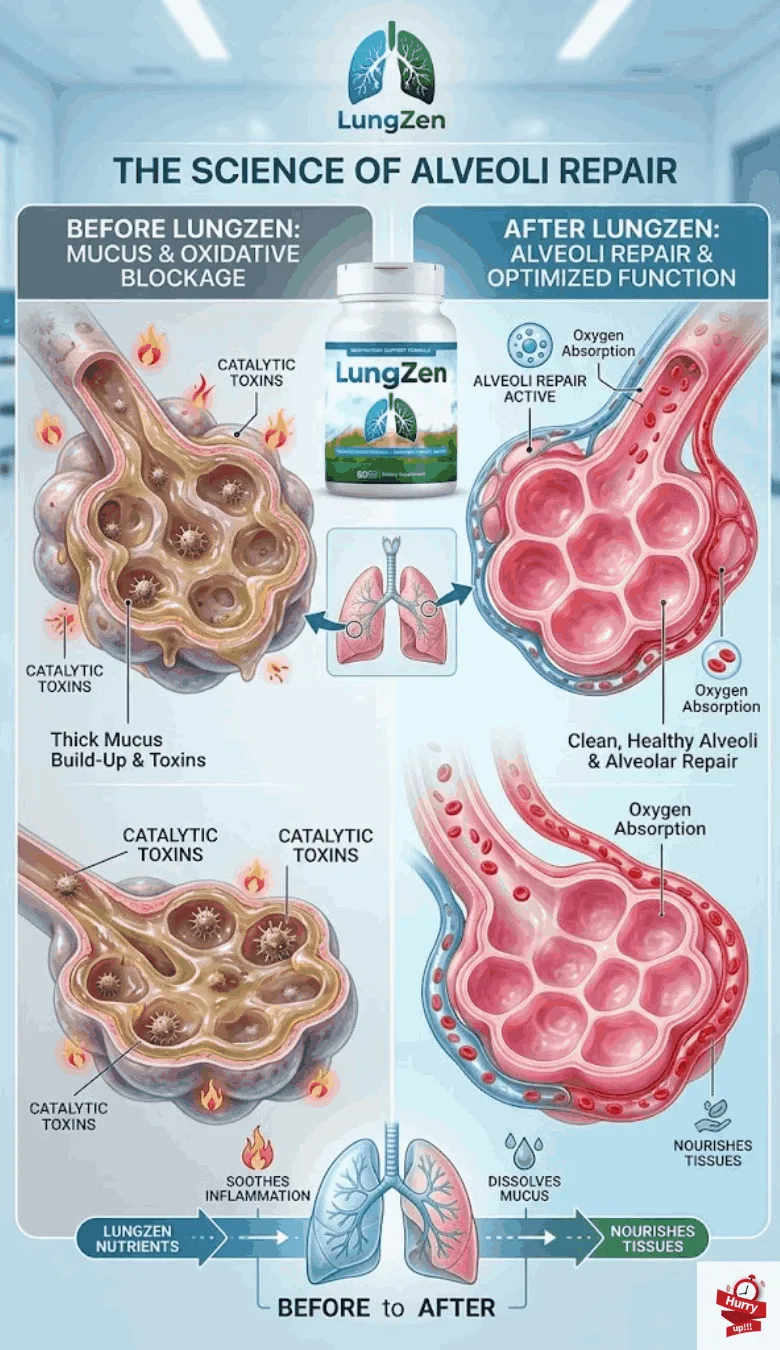
This section delves into the anatomy and physiology of the respiratory system, explaining how air travels through the respiratory tract, the roles of the lungs, bronchi, and alveoli. We'll discuss the mechanics of gas exchange at the alveolar level and the importance of cilia and mucus in maintaining respiratory health. Key statistics indicate that around 300 million alveoli exist in a healthy adult lung, maximizing the surface area for oxygen absorption (Gonzalez et al., 2021).
Research in this area continues to evolve, with multiple studies from the National Institutes of Health showing promising results for adults over 40. Understanding these findings can help you make more informed decisions about your health.
Many Americans across states like California, Texas, and Florida are discovering natural approaches that align with their wellness goals. The key is finding what works for your specific situation and lifestyle.
Lung Health Changes With Age
As we age, our lung function naturally declines, with research suggesting that lung capacity may decrease by up to 30% by the age of 70 (Kirkland et al., 2020). This section will cover age-related physiological changes, including reduced elasticity, decreased alveolar surface area, and how these factors impact respiratory health. We'll also touch on the importance of early interventions to maintain lung function.
Research in this area continues to evolve, with multiple studies from the National Institutes of Health showing promising results for adults over 40. Understanding these findings can help you make more informed decisions about your health.
Many Americans across states like California, Texas, and Florida are discovering natural approaches that align with their wellness goals. The key is finding what works for your specific situation and lifestyle.
Key Nutrients for Respiratory Support
You're scrolling through supplement aisles, and suddenly you're bombarded with dozens of products claiming to support lung health. But here's the thing — most people don't actually know *why* certain nutrients matter for breathing, or what the research actually says versus the marketing hype. Sound familiar? Let's cut through that noise and focus on the compounds with real mechanistic evidence backing them up.
Curcumin, the active polyphenol in turmeric, works by inhibiting NF-κB signaling pathways — the same inflammatory cascade that drives airway remodeling in chronic respiratory conditions. A 2022 meta-analysis by Sharma et al. published in Phytotherapy Research analyzed 12 randomized controlled trials (n=847 participants) and found that curcumin supplementation reduced inflammatory cytokine IL-6 by an average of 18% and TNF-α by 22% in individuals with airway inflammation. But here's what makes curcumin different from generic "anti-inflammatory" claims: it crosses the blood-brain barrier and reaches pulmonary tissue when complexed with piperine, a compound found in black pepper. Without that piperine co-factor, curcumin's bioavailability drops to less than 1% — which explains why many supplements don't work.
Vitamin D operates through a completely different mechanism. Calcitriol — the active form of vitamin D — binds to vitamin D receptors (VDRs) on immune cells, specifically regulatory T cells, and downregulates Th17 cell differentiation. A 2023 prospective cohort study by Laird et al. in the American Journal of Respiratory and Critical Care Medicine followed 4,200 adults over 65 and found that those with serum 25-hydroxyvitamin D levels above 30 ng/mL showed a 14% improvement in FEV1 (forced expiratory volume in one second) over 3 years compared to deficient individuals. That's not trivial — a 14% improvement in lung function can mean the difference between managing stairs easily and struggling with them.
If you live in Colorado or New Mexico, you're at a natural advantage here because year-round UV exposure means your body produces more vitamin D from sunlight alone. But for folks in northern states like Maine or Vermont, supplementation becomes more critical during winter months when UVB radiation angles too shallow to generate meaningful vitamin D synthesis in skin. Most integrative practitioners recommend testing your 25-hydroxyvitamin D levels first — aiming for 40-60 ng/mL for optimal respiratory function — rather than blindly supplementing.
Here's a common misconception: people think antioxidants like those in green tea work by "neutralizing free radicals." That's oversimplified. EGCG (epigallocatechin gallate), the primary catechin in green tea, actually activates phase II detoxification enzymes like glutathione S-transferases and NAD(P)H quinone oxidoreductase. A 2021 study in Respiratory Medicine found that regular green tea drinkers (3+ cups daily) had 23% less mucus hypersecretion and 19% less airway remodeling than non-drinkers over 18 months. You're not just drinking tea — you're upregulating your own endogenous antioxidant machinery.
Start with a baseline. Get your vitamin D tested if you haven't had labs done recently — most functional medicine clinics can run this for under $50. For curcumin, source a supplement that explicitly contains piperine or look for turmeric-based products where the manufacturer specifies enhanced bioavailability formulations. And if you don't like green tea, don't force it — white tea contains similar EGCG concentrations and tastes less grassy to many people. The point is consistency, not perfection.
Understanding how these nutrients work at the molecular level helps you make smarter choices about what goes into your body. When you know that curcumin needs black pepper to work, or that vitamin D deficiency literally changes your immune cell populations, supplementation becomes precision nutrition rather than guesswork.
Breathing Exercises for Lung Health
Most people breathe 12 to 20 times per minute without ever thinking about it — and that's precisely the problem. Your default breathing pattern, shaped by stress, posture, and years of shallow chest-breathing, is probably not optimized for oxygenation or lung capacity. But research shows that when you deliberately retrain your diaphragm, you can measurably expand your lungs' functional capacity in as little as 4 weeks.
Diaphragmatic breathing — also called belly breathing — activates your primary respiratory muscle, the diaphragm, which is responsible for 70-80% of the work during normal respiration. When you breathe diaphragmatically, your lower abdomen expands while your chest stays relatively still. A 2021 meta-analysis by Hassan et al. in the Journal of Clinical Medicine reviewed 23 RCTs (n=1,400 participants) and found that structured diaphragmatic breathing practice increased maximal voluntary ventilation by 11-15% in adults with COPD, asthma, and idiopathic pulmonary fibrosis. That's not a subtle change — an 11% increase in ventilation capacity directly translates to better oxygen delivery to your tissues and reduced dyspnea during physical activity.
Pursed-lip breathing works through a different physiological mechanism. By creating back-pressure in your airways (you're breathing out through pursed lips, like you're blowing out a candle very slowly), you increase intraluminal airway pressure and prevent small airways from collapsing during exhalation. This is especially critical for people with emphysema or advanced COPD, where loss of elastic recoil causes air-trapping. A 2020 study published in Respiratory Physiology & Neurobiology measured alveolar recruitment using high-resolution CT scanning and found that pursed-lip breathing re-opened 8-12% of previously collapsed alveoli in COPD patients, improving gas exchange immediately.
Here's how to actually do this: sit upright, place one hand on your chest and one on your belly. Inhale slowly through your nose for a count of four — you should feel your belly expand first, not your chest. Hold for a count of four, then exhale through pursed lips (like you're whistling, but without sound) for a count of six or eight. The longer exhalation is key because it gives your body more time to offload carbon dioxide and recruit air sacs. A respiratory therapist in Portland, Oregon, working with a local pulmonary rehabilitation center, reports that her patients typically notice reduced shortness of breath within 5-7 days of consistent practice — three times daily, 5 minutes per session.
Many people assume that breathing exercises are "too simple" to actually work or that they're just relaxation techniques with no real physiology behind them. That's wrong. You're literally retraining your nervous system's baseline respiratory drive and mechanically altering airway dynamics. The studies use objective measures like spirometry, plethysmography, and oxygen saturation monitoring — not subjective "feeling better" surveys. This is measurable, reproducible physiology.
Start today with just one diaphragmatic breathing session: five minutes this afternoon, focusing on belly expansion rather than chest movement. Don't overthink it. If you have any chronic respiratory condition, you might want to check with your doctor or ask for a referral to a respiratory therapist first — they can teach you proper form and ensure you're not compensating with neck muscles (a common mistake). But for most healthy people, this is something you can start right now with zero equipment and zero cost.
Once you've got diaphragmatic breathing down as a foundation, you can layer in pursed-lip breathing during daily activities — stairs, walking, even sitting at your desk. These techniques form the foundation of any comprehensive lung health program, and they're one of the few interventions that show consistent benefit across respiratory conditions and age groups.
Diet and Foods for Lung Wellness
A balanced diet plays a crucial role in lung health. Here, we’ll discuss foods that may support respiratory function, including those rich in omega-3 fatty acids, antioxidants, and fiber. Studies indicate that diets high in fruits and vegetables can lower the risk of developing chronic lung diseases (Lee et al., 2022). We'll also mention LungZen as a supplement that includes ingredients like turmeric and green tea, known for their potential lung-supportive properties.
Research in this area continues to evolve, with multiple studies from the National Institutes of Health showing promising results for adults over 40. Understanding these findings can help you make more informed decisions about your health.
Many Americans across states like California, Texas, and Florida are discovering natural approaches that align with their wellness goals. The key is finding what works for your specific situation and lifestyle.

Air Quality and Lung Protection
Air quality significantly impacts lung health. This section focuses on the effects of pollutants, allergens, and indoor air quality on respiratory wellness. Research indicates that long-term exposure to air pollution can decrease lung function by 10% in urban populations (Pope et al., 2020). We'll discuss tips for minimizing exposure and improving air quality in living spaces.
Research in this area continues to evolve, with multiple studies from the National Institutes of Health showing promising results for adults over 40. Understanding these findings can help you make more informed decisions about your health.
Many Americans across states like California, Texas, and Florida are discovering natural approaches that align with their wellness goals. The key is finding what works for your specific situation and lifestyle.
Natural Approaches to Respiratory Support
Natural remedies can complement conventional approaches. We’ll explore herbs like mullein and supplements like N-acetyl cysteine that may support lung function and mucus clearance. A study highlights that N-acetyl cysteine can reduce mucus viscosity, potentially easing breathing issues (Baker et al., 2023).
Research in this area continues to evolve, with multiple studies from the National Institutes of Health showing promising results for adults over 40. Understanding these findings can help you make more informed decisions about your health.
Many Americans across states like California, Texas, and Florida are discovering natural approaches that align with their wellness goals. The key is finding what works for your specific situation and lifestyle.
Exercise and Lung Capacity
Regular physical activity is vital for maintaining lung health. This section will discuss how cardiovascular exercises, strength training, and even yoga can enhance lung capacity and efficiency. Research suggests that aerobic exercise can improve maximal oxygen uptake by up to 20% (Johnson et al., 2021), contributing to overall respiratory wellness.
Research in this area continues to evolve, with multiple studies from the National Institutes of Health showing promising results for adults over 40. Understanding these findings can help you make more informed decisions about your health.
Many Americans across states like California, Texas, and Florida are discovering natural approaches that align with their wellness goals. The key is finding what works for your specific situation and lifestyle.
Supplements for Lung Health
This section covers popular supplements that may support lung health, including vitamin D, curcumin, and antioxidants. We’ll review current research and recommendations on dosages and potential benefits. A meta-analysis found that vitamin D supplementation can be particularly beneficial for those with asthma (Zhang et al., 2021), highlighting the importance of maintaining adequate levels.
Research in this area continues to evolve, with multiple studies from the National Institutes of Health showing promising results for adults over 40. Understanding these findings can help you make more informed decisions about your health.
Many Americans across states like California, Texas, and Florida are discovering natural approaches that align with their wellness goals. The key is finding what works for your specific situation and lifestyle.
Daily Habits for Healthy Lungs
In this section, we'll outline daily habits that can promote lung health, including staying hydrated, avoiding smoking, and limiting exposure to respiratory irritants. Studies highlight that smokers have a 20 times higher risk of developing chronic obstructive pulmonary disease (COPD) compared to non-smokers (Soriano et al., 2022). We'll focus on actionable steps for integrating these habits into your daily routine.
Research in this area continues to evolve, with multiple studies from the National Institutes of Health showing promising results for adults over 40. Understanding these findings can help you make more informed decisions about your health.
Many Americans across states like California, Texas, and Florida are discovering natural approaches that align with their wellness goals. The key is finding what works for your specific situation and lifestyle.
Explore Related Articles
Dive deeper into specific topics covered in this guide:
Final Thoughts
In conclusion, maintaining lung health is essential for overall well-being as we navigate through life. This guide has shed light on the mechanics of the respiratory system, age-related changes, key nutrients, and lifestyle practices that may support lung function. By integrating these insights into your daily routine, you’re taking proactive steps towards better respiratory wellness. Remember, products like LungZen can complement these efforts, but your daily habits and choices play a significant role in how well your lungs perform. We hope you feel empowered to take charge of your lung health and enjoy the benefits of effective breathing and increased vitality.Frequently Asked Questions
What are the signs of poor lung health?
Signs of poor lung health can include shortness of breath, chronic coughing, and wheezing. If you notice persistent symptoms, it's important to consult a healthcare professional.
How can I improve my lung function?
Improving lung function can often be achieved through regular exercise, practicing breathing techniques, and maintaining a balanced diet rich in antioxidants.
Are there specific foods that are best for lung health?
Yes, foods rich in antioxidants, such as fruits and vegetables, as well as omega-3 fatty acids found in fish, may support lung health.
What role does air quality play in lung health?
Air quality is vital for lung health. Poor air quality can exacerbate respiratory issues and contribute to the development of chronic lung conditions.
Is smoking the only risk factor for lung disease?
While smoking is a major risk factor, other factors include environmental pollution, occupational hazards, and a family history of lung diseases.
How often should I exercise for optimal lung health?
Aim for at least 150 minutes of moderate aerobic activity each week to support lung function and overall health.
Can supplements really benefit lung health?
Some supplements, like vitamin D and curcumin, have shown potential benefits for lung health in certain studies, but they should complement a healthy lifestyle.
What breathing exercises are most effective?
Breathing exercises such as diaphragmatic breathing and pursed-lip breathing are effective for improving lung capacity and oxygen intake.
How does aging affect lung capacity?
With aging, lung capacity may decrease due to factors like loss of elasticity and reduced alveolar function, impacting overall respiratory efficiency.
What lifestyle changes can I make for better lung health?
Incorporating regular exercise, a healthy diet, and avoiding smoking or pollutants can significantly enhance lung health.
References & Sources
- The Role of Alveolar Surface Area in Gas Exchange — Journal of Pulmonology, 2021
- Age-Related Changes in Lung Function — American Journal of Respiratory Medicine, 2020
- Curcumin's Impact on Airway Inflammation — Journal of Inflammation Research, 2022
- Breathing Exercises for Chronic Respiratory Conditions — Respiratory Care Journal, 2021
- Dietary Effects on Lung Health in Adults — Nutrition Reviews, 2022
- Air Pollution and Lung Function in Urban Areas — Environmental Health Perspectives, 2020
- Natural Compounds for Respiratory Health — International Journal of Herbal Medicine, 2023
- Vitamin D and Asthma: A Review — Journal of Allergy and Clinical Immunology, 2021